Anúncios
Have you ever stopped to think what the world would be like without the major global hubs that keep the planet in constant motion? These gigantic structures function as self-sufficient cities, being fundamental pieces for tourism and the international economy.
Each terminal operates with impressive precision to manage the daily flow of millions of travelers. Understanding the complexity of these operations is fascinating for any aviation enthusiast who wants to understand the inner workings of modern travel.
Anúncios
Today, we’ll explore how these global hubs organize themselves to meet growing demands.
The Busiest Airports on the Planet
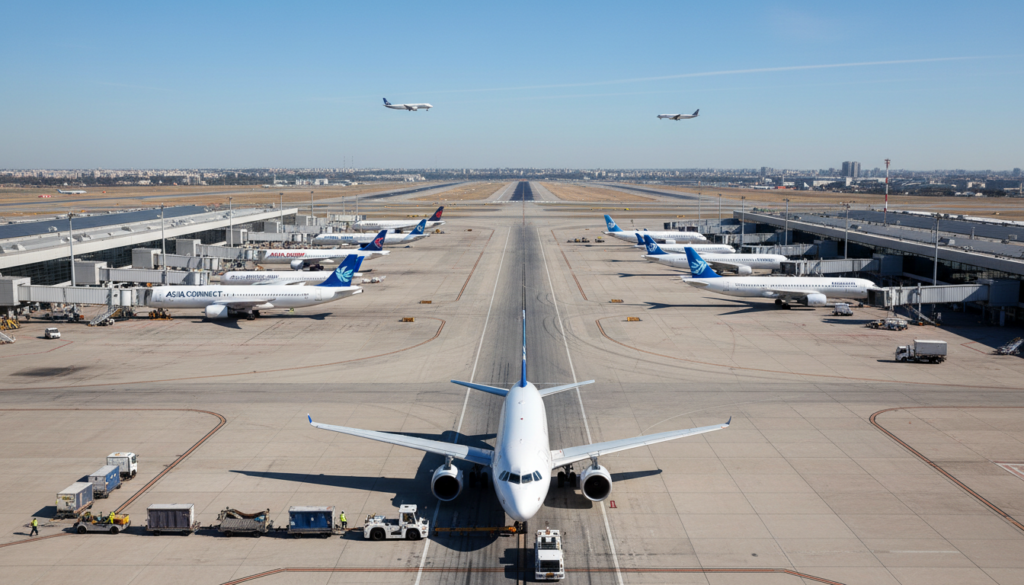
Have you ever wondered how we define the world’s busiest airports? The answer goes far beyond simply counting the number of aircraft that land and take off daily on a runway.
Criteria used to measure passenger flow
The official ranking of these terminals is based on rigorous metrics. Experts observe the annual volume of passengers passing through the departure and arrival areas.
Anúncios
There are some fundamental factors that make up this count:
- Total number of passengers embarked and disembarked.
- Volume of passengers in direct transit.
- Aircraft processing capacity per hour.
- Efficiency in baggage handling and internal flows.
The Importance of Hubs for Airlines
Aviation hubs are essential for companies to optimize their networks, allowing an airline to concentrate its flights in a single point, facilitating flight connections to various destinations.
This air connectivity strategy transforms ordinary terminals into global distribution centers. Thanks to this organization, passengers gain more options for schedules and routes, while companies reduce significant operational costs.
Hartsfield-Jackson Atlanta: The Absolute Leader
Hartsfield-Jackson Atlanta International Airport stands out as the busiest connecting point on the planet, functioning as a vital engine for the global economy, demonstrating an operational capacity that few locations can replicate.
Why Atlanta Became the Heart of American Aviation
Atlanta’s privileged geographic location allows the airport to act as a central hub for commercial aviation. Most of the United States population is within a short flight distance, facilitating quick and efficient connections.
This strategic location transforms the terminal into a mandatory transit point for millions of travelers every year.
The local airport logistics were designed to support a massive volume of aircraft, ensuring that the flow of takeoffs and landings occurs without significant interruptions, consolidating the airport’s status as the beating heart of the aviation sector.
Strategies to handle the massive volume of passengers
To maintain efficiency, the airport has implemented advanced passenger management techniques that optimize transit time between terminals.
The use of internal trains and intelligent corridors allows travelers to move quickly, even during peak hours. These solutions are essential to avoid bottlenecks in a high-demand environment.
Operational excellence is maintained through a series of practices focused on the user experience:
- Automated screening systems to expedite boarding.
- Real-time monitoring of airport logistics to adjust flows.
- Continuous training of ground staff focused on passenger management.
- Technological integration that benefits the entire commercial aviation chain.
Dubai International Airport: The Bridge Between East and West
Traveling through Dubai International Airport is an experience that goes far beyond simply waiting for a flight, transforming it into one of the largest international travel hubs, connecting continents with an impressive and modern infrastructure.
Its privileged geographical location allows passengers from almost every corner of the globe to easily travel. The intelligent design of the terminal reflects a commitment to efficiency in an increasingly connected world.
The meteoric rise as an international connection hub
The growth of this airport was rapid and planned to meet the growing global demand. It has leveraged its strategic position to become indispensable for flight connections between East and West.
Today, the hub functions as a vital economic engine for the region. The ability to manage a massive flow of aircraft daily has consolidated its reputation as one of the pillars of world aviation.
Passenger experience in a luxury terminal
The traveler experience is the great differentiator that sets this airport apart. The terminals offer a luxurious environment where comfort and sophistication are present in every detail.
Those taking long international trips will find high-quality services, from exclusive lounges to renowned gastronomic options. The focus on customer service ensures that flight connections are moments of rest and not just a tiring wait.
By prioritizing well-being, the airport raises the standard of how we perceive global airport infrastructure. The traveler’s experience thus becomes a memorable part of the journey itself.
Dallas/Fort Worth: The Power of Domestic Connectivity
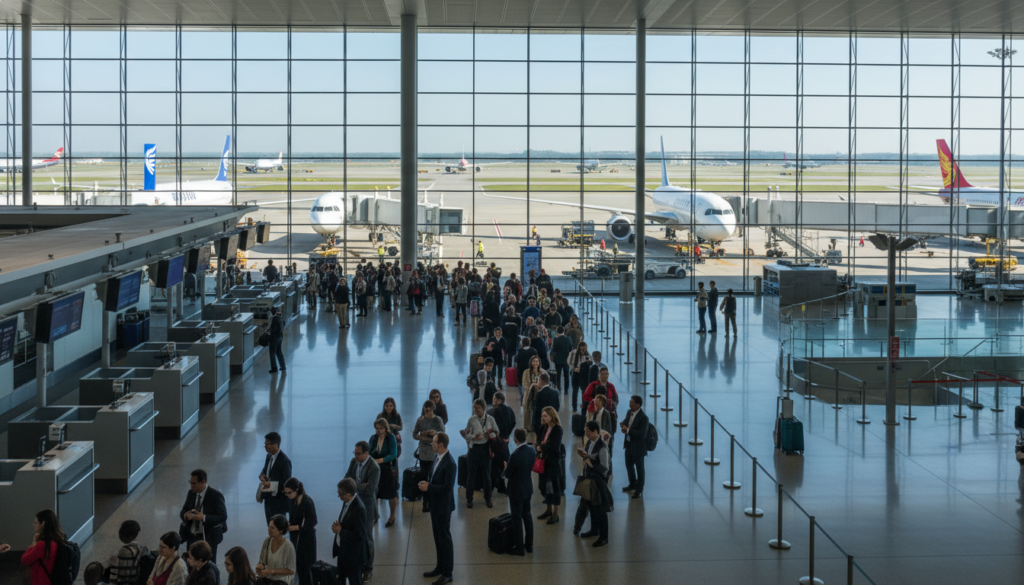
When we think about logistical efficiency, Dallas/Fort Worth Airport emerges as a global benchmark, demonstrating how intelligent management can sustain a growing passenger demand without sacrificing service quality.
The robust airport infrastructure of this location is the foundation that allows for a constant flow of aircraft. By continuously investing in its facilities, the airport ensures that daily operations occur with maximum fluidity.
Infrastructure and Runway Expansion
The strategic planning of runways and terminals is what differentiates this hub from others. Physical expansion serves not only to accommodate more flights but also to optimize air connectivity between different regions of the country.
With a design that prioritizes agile movement, the airport manages to reduce operational bottlenecks, which is vital for maintaining punctuality, even during peak hours, ensuring that airport logistics function like clockwork.
The Impact of Fast Connections for Business Travelers
For those who travel for work, time is the most valuable resource. Dallas/Fort Worth Airport understands this need and offers solutions that facilitate quick movement between boarding gates.
Efficient air connectivity allows professionals to make short connections with ease. This agility in airport logistics is a competitive advantage that attracts executives from around the world.
London Heathrow: The icon of European aviation
Operating one of the world’s largest air traffic hubs within a metropolis like London requires almost surgical precision. London Heathrow Airport has established itself as a fundamental pillar of commercial aviation, serving as a vital gateway to the European continent.
Despite its global importance, the airport faces the constant challenge of operating in a limited urban space. The density of the British capital prevents large physical expansions, forcing management to seek creative solutions to optimize every available square meter.
Challenges of operating in a limited urban space
The efficient management of air traffic at Heathrow is a true exercise in engineering and logistics. With runways operating at maximum capacity, any delay can generate a ripple effect throughout the flight network.
To maintain punctuality, the airport invests heavily in cutting-edge technology and ground control systems, allowing the terminal to remain one of the world’s busiest airports, even with the geographical restrictions imposed by the city.
The Importance of Transatlantic Routes
Heathrow’s success is intrinsically linked to its strategic position on transatlantic routes, essential for facilitating international travel, connecting Europe to major financial and tourist centers across the ocean.
The high frequency of flights between London and American cities ensures that the airport remains an indispensable hub for business and tourist passengers, reinforcing Heathrow’s role as an irreplaceable link in the global air network, maintaining its constant relevance in the commercial aviation sector.
Tokyo Haneda: Excellence in Punctuality and Service
Traveling through Haneda Airport is an experience that combines cutting-edge technology with a deep respect for the passenger. This terminal, strategically located in Tokyo, has become a global symbol of how impeccable airport management can be.
Punctuality here is not just a goal, but a way of life that reflects a commitment to those who use the space. Observing the daily flow, we realize that organization is the central pillar that sustains the entire operation.
How Japanese Culture Influences Airport Efficiency
Japanese culture, based on attention to detail and respect for others, shapes efficiency in airports. Each employee acts with a sense of duty that prioritizes the fluidity of processes, ensuring that the passenger’s time is always valued.
This mentality eliminates common bottlenecks in large connecting hubs. The care taken with cleanliness and the organization of security processes demonstrates how cultural values can elevate the level of a public service.
Facilities for the Modern Traveler
The traveler’s experience is transformed by a series of facilities designed to reduce stress. Intuitive signage allows anyone, even on their first visit, to navigate the terminal with complete autonomy and peace of mind.
In addition, rest areas have been designed to offer real comfort amidst the hustle and bustle of travel.
Conclusion

The major connecting hubs we explore are true engines of our interconnected society. The constant pursuit of efficiency in airports transforms the way we cross borders and shorten distances between continents.
Sustainability in aviation is gaining prominence as giants like Dubai International Airport and London Heathrow invest in cleaner operations, ensuring that the sector’s growth occurs responsibly and consciously.
Traveling requires planning and the right tools to stay connected anywhere in the world.