Anúncios
Have you ever wondered if it’s possible to turn an ordinary trip into a luxury experience without spending a fortune? Many people believe that only frequent travelers or those paying premium rates can access superior accommodations.
The truth is that the travel industry holds valuable secrets. Understanding how bidding, overbooking, and complimentary upgrades work could be the key to securing an unforgettable travel upgrade.
Anúncios
Today, we’ll explore how each of these mechanisms works in practice.
Bidding: how to participate in offers for better travel or accommodation experiences
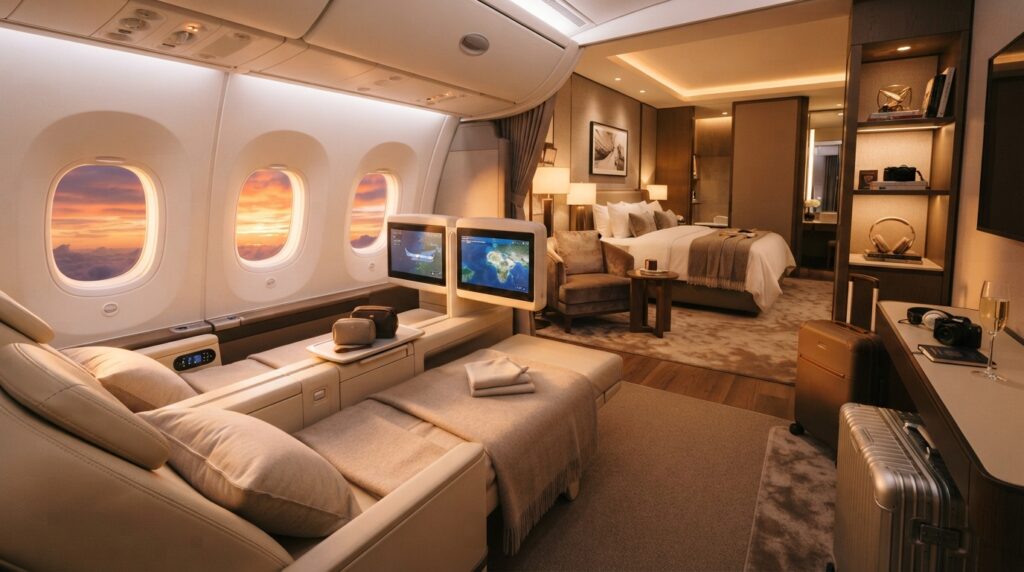
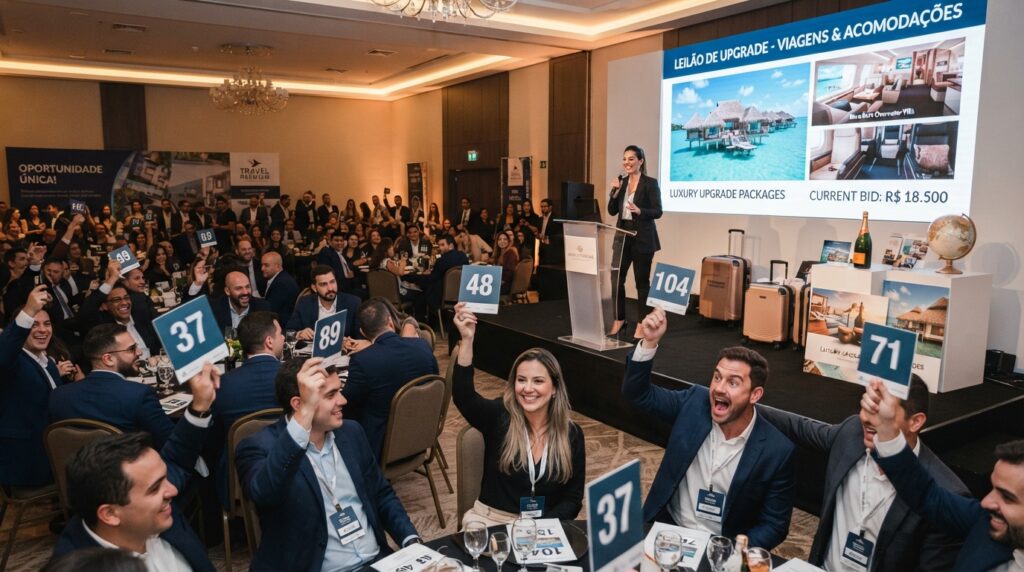
Participating in an upgrade auction can be the key to turning an ordinary trip into an unforgettable experience, allowing travelers to take the initiative and try to secure a more spacious seat or a superior room at a price they set themselves.
Understanding “bids” with airlines and hotels
The term “bid” refers to an offer made by a customer to secure a service tier higher than the one originally booked.
Anúncios
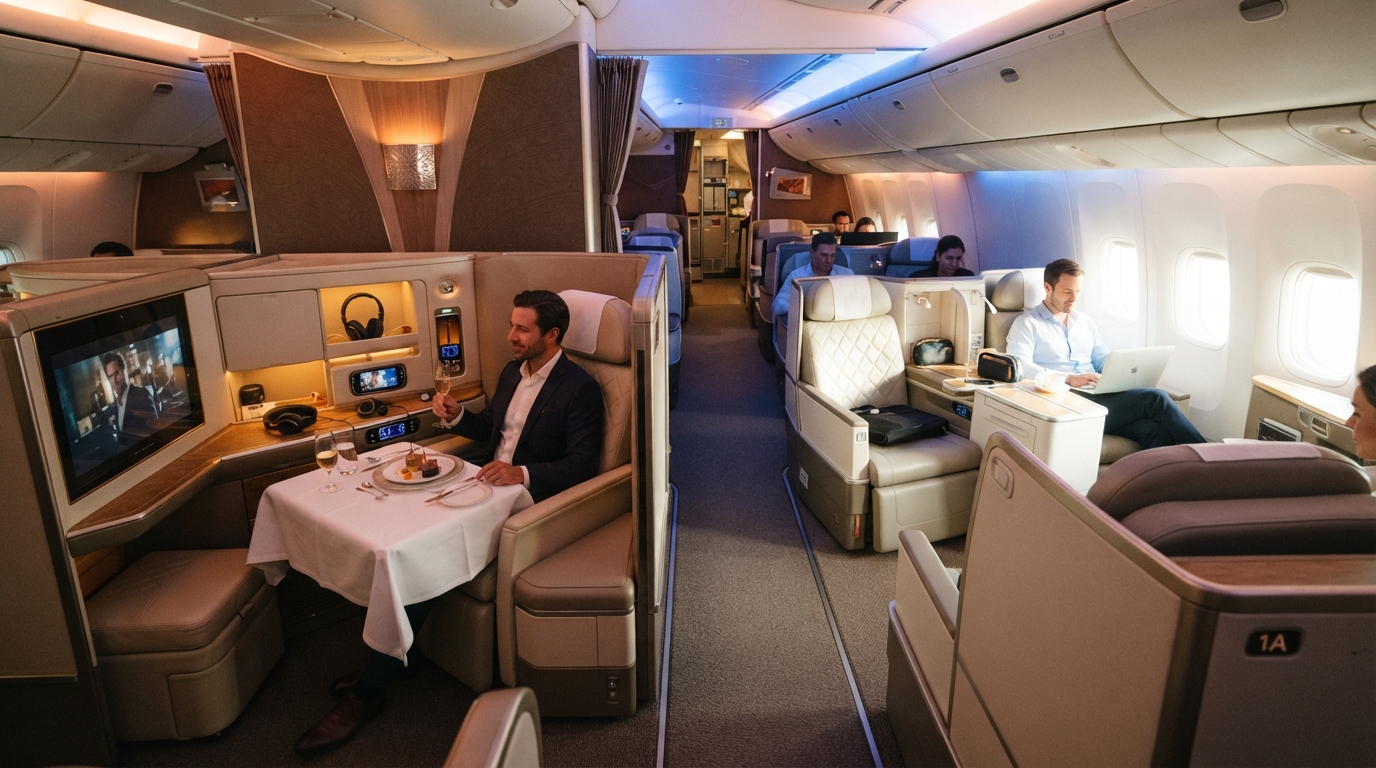
Bidding with airlines is a common practice where passengers offer an additional amount to upgrade—for example, moving from economy to business class.
In hotels, the process follows a similar logic, allowing guests to try for a room upgrade; it is a dynamic way to fill spaces that might otherwise remain empty.
How to receive, evaluate, and submit an upgrade proposal
You will generally receive an email invitation after making your reservation, provided the company offers this option. Upon accessing the link, you will see an interface where you can specify the amount you wish to pay for the upgrade.
Carefully evaluate the available options before submitting your upgrade proposal, keeping in mind that the bid amount applies either per person or per reservation, depending on the company’s policy.
Criteria for setting a price without overpaying
To determine a fair bid, research the price difference between the categories at the time of the original purchase. Avoid offering amounts very close to the cost of booking the superior category directly, as the goal is to save money.
Also, consider the duration of the trip or stay. A larger investment might be worthwhile for long-haul flights but perhaps not as advantageous for short journeys.
Deadlines, payment methods, and offer confirmation
Each company sets a deadline for submitting bids, which usually closes between 24 and 48 hours before departure or check-in. Payment is generally processed only if the offer is accepted.
Ensure that your registered credit card has sufficient available credit. After submission, you will receive confirmation that your proposal is being reviewed by the system.
What happens when the proposal is accepted or declined
If your offer is accepted, you will receive an email notification confirming the change and the charge to your card. If it is declined, your original reservation remains unchanged, and no extra amount will be charged.
The upgrade auction is an automated process; therefore, there is no direct negotiation with staff members. If your bid is unsuccessful, you can still try to secure an upgrade at check-in.
Things to consider: fees, changes, and reservation conditions
Before confirming, carefully read the rules regarding what is included in the new category. Some promotional fares may not be eligible for this type of offer or may result in the loss of specific benefits.
Check whether the change affects the cancellation policy or loyalty program point accrual. Staying informed about the conditions ensures that your upgrade proposal is a well-informed and advantageous decision.
Overbooking and operational upgrades: when the company needs to rebook customers
Passenger rebooking is a process that can turn an unexpected situation into a luxury experience.
Often, what appears to be a logistical issue turns into a unique opportunity to enjoy superior services during the journey.
Why overselling occurs
Airlines use statistical models to predict the number of no-shows for each flight. Flight overbooking happens when an airline sells more tickets than there are physical seats on the aircraft.
This strategy aims to ensure the plane takes off with the highest possible occupancy. Without this practice, many seats would remain empty due to passengers failing to show up for boarding at the last minute.
How rebooking can lead to a cabin upgrade
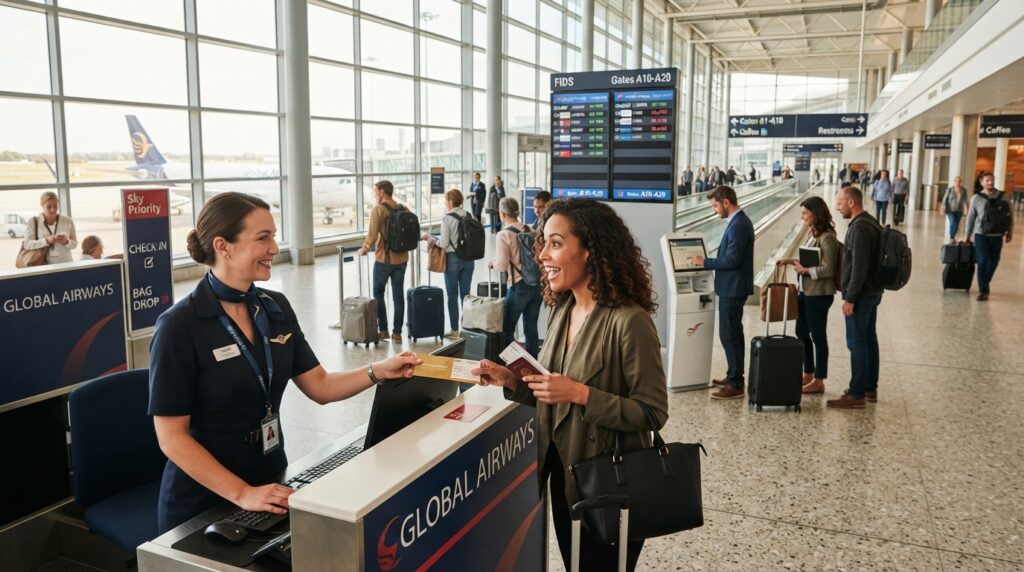
When a flight is fully booked, ground staff must reorganize cabin seating; this is when “operational upgrades” occur—offered to accommodate passengers in higher classes when economy class is completely full.
This measure serves as a quick solution to balance the aircraft’s weight and distribution. Travelers selected for this change receive premium service at no extra cost.
The difference between accepting a voluntary change and being rebooked
There is a clear distinction between volunteering and being involuntarily rebooked. A volunteer agrees to give up their seat in exchange for compensation, whereas an imposed rebooking occurs due to the airline’s operational needs.
Benefits offered in exchange for flexibility
By volunteering to change flights, you can negotiate various forms of compensation. Airlines often offer:
- Credits for future travel or discount vouchers.
- Payment in cash or via prepaid cards.
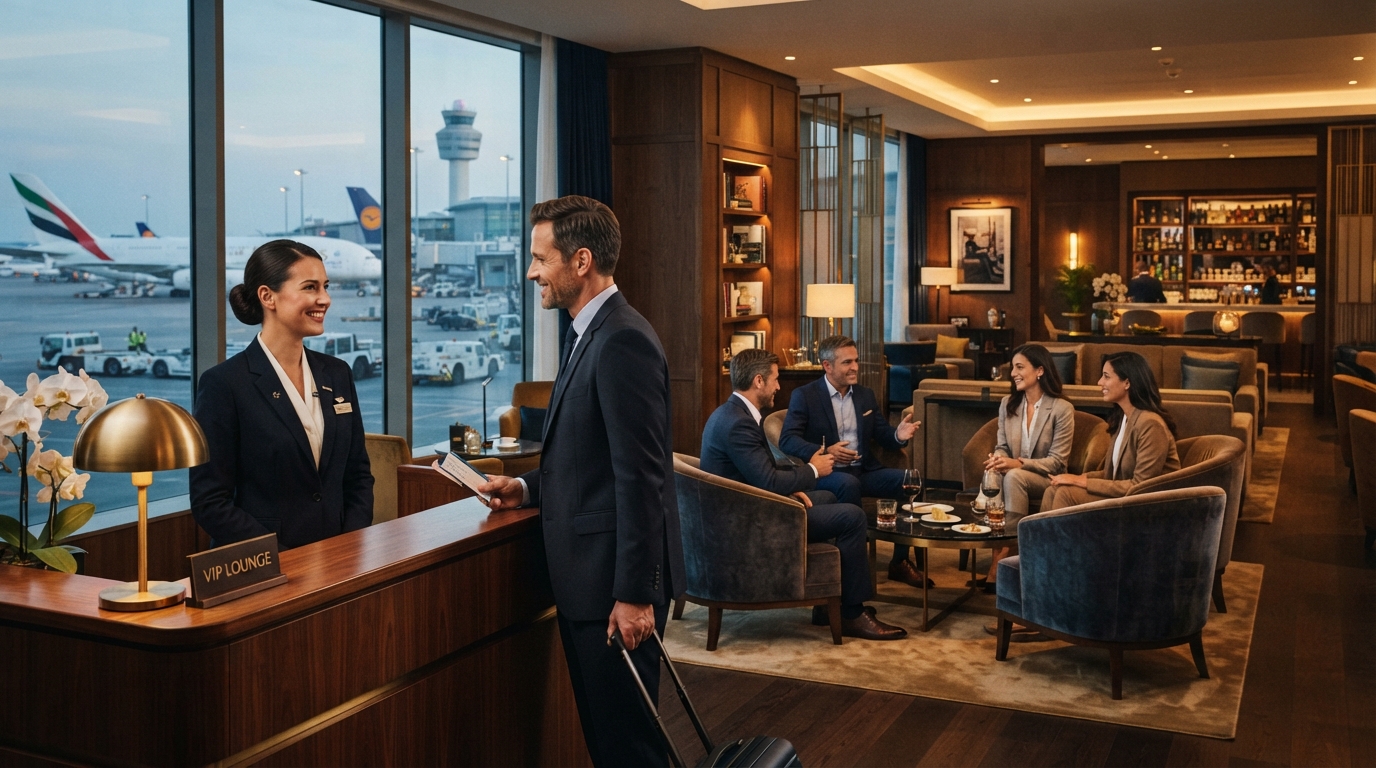
- Access to VIP lounges during the wait.
- Accommodation and transfers if the new flight is not until the following day.
Information to confirm before accepting
Before agreeing to any changes, check all the details of the new proposal. Confirm the new flight time, the class of service, and whether there will be extra costs for meals or transportation.
Ensure that the new booking guarantees a confirmed seat. Keep all receipts and documents provided by the ground staff to avoid future issues.
What to do if the offered alternative doesn’t meet your needs
If the alternative presented isn’t convenient, you have the right to negotiate or refuse the proposal. Remain calm and clearly explain why the change disrupts your travel plans.
Ask for options that minimize the impact on your original itinerary. In many cases, the staff may be able to find more suitable alternatives if you show a willingness to discuss the matter politely.
Complimentary offers: when an upgrade might be offered at no extra cost
The possibility of receiving a complimentary perk at a hotel is one of the most fascinating aspects of modern hospitality.
Often, what appears to be mere luck is actually the result of a combination of operational factors and the relationship between the guest and the establishment.
Common reasons for granting a complimentary perk
Companies constantly seek to delight their customers to ensure they return in the future.
When a hotel has vacant higher-category rooms, staff may choose to accommodate a guest there, transforming a standard reservation into a luxury experience.
Beyond immediate availability, the customer’s history plays a key role. Frequent guests who show appreciation for the brand are often prioritized when an opportunity for a free upgrade arises.
The influence of loyalty program status
Participating in a loyalty program is one of the most effective ways to increase your chances of receiving benefits. Hotel chains value their most loyal members and often have internal guidelines that favor these customers when assigning rooms.
Holding a high tier in the points system guarantees not only discounts but also special recognition, signaling to the staff that you are a long-standing partner of the chain.
Availability, history, and reservation type
Inventory management is complex and depends on various logistical factors. The type of reservation made—such as the length of stay or the booking channel—can influence management’s decision to grant a special treat.
How the timing of check-in or arrival can make a difference
Arriving at the hotel during off-peak hours can be a smart strategy. When the front desk is less busy, staff have more time to check the system and see if a free upgrade is possible to make your arrival more pleasant.
Why a complimentary perk should never be treated as a guarantee
It is essential to maintain realistic expectations during your trip. A courtesy is, by definition, a gesture of kindness rather than a contractual obligation on the part of the company.
Treating the benefit as a given can lead to unnecessary frustration. Always express appreciation for the staff’s attention, regardless of the final outcome of your request.
How to request an upgrade politely and increase your chances of a positive response
The way you approach the staff makes all the difference in the service you receive. Politeness and empathy are powerful tools for opening doors that might otherwise remain closed.
What to say to the staff without causing awkwardness
When speaking with the receptionist, be direct yet polite. You can ask if there is any availability for a higher room category during your stay, making it clear that you would be very grateful if it were possible.
- Maintain a calm and friendly tone of voice.
- Avoid demanding benefits as if they were a right.
- Show that you value the service provided by the hotel.
Documents and information that assist in reviewing the request
Having your loyalty program number and reservation confirmation on hand makes the team’s job easier.
If you are celebrating a special occasion, such as a birthday or honeymoon, mentioning this discreetly can help the hotel understand the context of your trip.
Conclusion
Mastering the nuances of bids, overbooking, and complimentary upgrades allows you to travel with greater comfort and peace of mind. Each of these options requires attention to detail and a careful analysis of the rules applied by the companies involved.
Successfully upgrading your travel experience depends directly on your ability to assess the true value of each offer. Always check the terms and conditions before confirming any changes to ensure the investment delivers the expected return in terms of comfort.
Have a backup plan in place to avoid disappointment should your desired opportunity fail to materialize. Solid planning turns the experience of flying or staying at a hotel into something predictable and enjoyable.