
Anúncios
The idea of flying without relying on fossil fuels sounds like something out of a science fiction movie, but modern engineering is turning that vision into reality.
Technological development is advancing at an impressive pace, making the future of electric aircraft an increasingly imminent possibility.
Anúncios
Today, we will explore the future of electric aircraft.
The future of electric aircraft: balancing innovation and technical challenges.
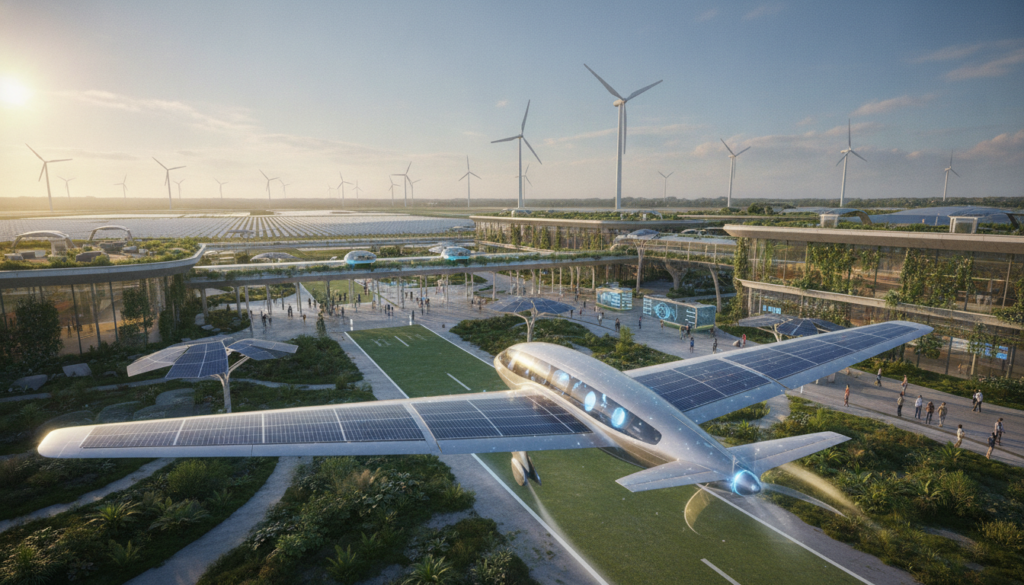
The future of electric aircraft depends directly on our ability to innovate in propulsion and energy storage systems.
Engineers around the world are working tirelessly to turn theoretical concepts into efficient, safe flying machines.
Anúncios
This journey requires a constant dose of creativity, as every technical breakthrough brings us closer to a more sustainable model of transportation. The quest for smart solutions drives today’s aviation industry.
The energy density of current batteries
One of the major obstacles faced today is the storage capacity of high-density batteries.
Unlike fossil fuels, which have very high energy density, current batteries still require considerable volume to deliver the same amount of energy.
This chemical limitation requires technological innovation to focus on new materials and molecular structures, aiming to create cells that are light enough for flight yet powerful enough to keep engines running for extended periods.
Weight and flight range limitations
The relationship between aircraft weight and flight range poses a critical challenge for electric propulsion. Since batteries are heavy, every extra kilogram added to the structure demands more energy for takeoff and maintaining altitude.
To overcome this issue, designers are exploring lighter composite materials and optimized aerodynamic designs.
Every small gain in efficiency is a victory that paves the way for electric aircraft to become an everyday reality in our travels.
Key projects and aircraft already taking to the skies
Technological innovation is enabling electric aircraft to move from the drawing board to the air.
Engineers and visionaries are working tirelessly to transform the aviation sector, seeking clean alternatives for passenger and cargo transport—a milestone in the history of modern aviation.
The role of Eviation’s Alice aircraft
The Alice aircraft, developed by Eviation, stands out as one of the most promising projects for regional flights.
With an elegant, all-electric design, it is engineered to transport passengers over short distances with zero carbon emissions, proving that energy efficiency and comfort can be combined in a single vehicle.
Joby Aviation’s developments in urban mobility
Joby Aviation focuses its efforts on urban air mobility, creating vehicles capable of vertical takeoff and landing. These air taxis promise to drastically reduce travel times in congested major urban centers.
The company aims to integrate its vehicles into people’s daily lives, making air travel fast and accessible.
Airbus’s bet on the ZEROe project
Industry giant Airbus is placing a major bet on the ZEROe project to revolutionize the commercial aviation market.
The goal is to develop hydrogen-powered aircraft that use fuel cells to generate electricity, demonstrating the industry’s commitment to a more sustainable future that is less dependent on fossil fuels.
The advancements achieved by these companies offer clear benefits for the future of transportation:
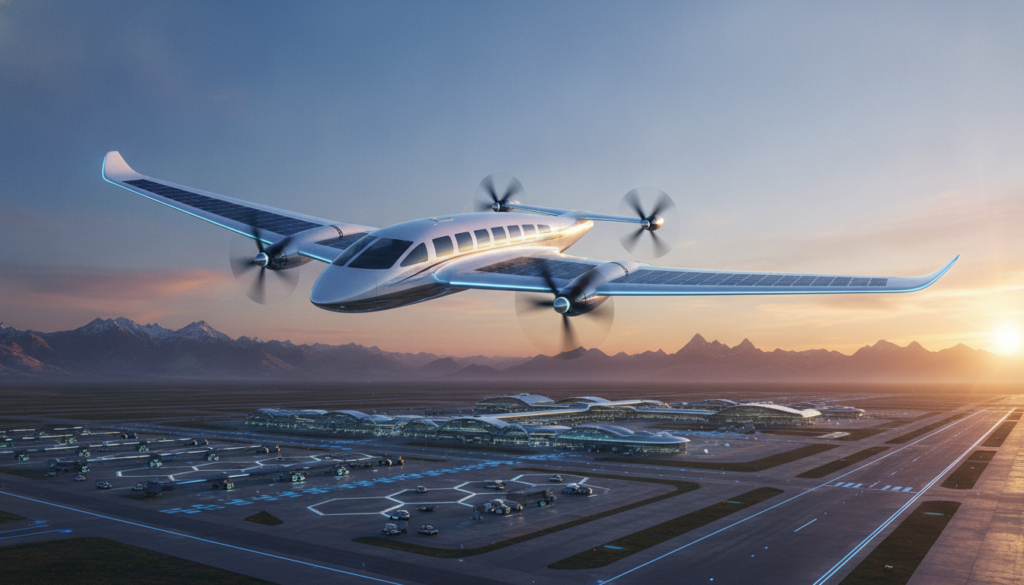
- Significant reduction in pollutant gas emissions.
- Lower noise levels during flight operations.
- Optimization of travel time in densely populated areas.
- Lower operating costs for airlines.
- Stimulus for the development of new battery technologies.
Airport infrastructure and charging challenges
The transition to electric aviation requires a fundamental shift in how we conceive airports. For battery-powered aircraft to become an everyday reality, we must transform these facilities into true clean energy hubs.
Efficient charging infrastructure is the essential foundation needed to support this emerging fleet.
Adapting terminals for fast charging
The greatest logistical challenge lies in the ability to charge aircraft during the short intervals between flights.
Existing terminals require structural upgrades to accommodate high-power charging stations, necessitating significant investment in fast-charging technology to minimize ground time.
Furthermore, energy flow management must be precise to avoid overloading existing systems. Implementing smart charging infrastructure will allow operators to manage demand dynamically.
With the right technical support, it will be possible to maintain flight schedules without compromising operational safety.
The role of renewable energy in airport power grids
The sustainability of electric aviation depends directly on the source of the electricity used.
Modern airports are investing in renewable sources—such as solar panels and wind turbines—to power their operations, thereby reducing reliance on the public grid and lowering the sector’s overall carbon footprint.
A robust power grid is crucial to ensuring energy availability whenever it is needed.
By integrating large-scale storage systems, airports can stabilize the power supply during peak demand. This sustainable ecosystem is what will make electric aviation a viable and efficient alternative for the future of air travel.
Safety and reliability in electric propulsion systems
Aviation safety is the cornerstone of any innovation in the aviation sector. When discussing the transition to electric propulsion, the commitment to passenger safety remains the top priority for engineers and designers.
Current technology is designed to offer levels of protection equivalent to or exceeding those of conventional models, ensuring that every flight is conducted with complete peace of mind by utilizing systems that undergo exhaustive evaluations before entering commercial service.
Redundancy in motors and control systems
A key feature distinguishing these new models is their redundancy architecture. Unlike single-engine aircraft, many electric designs employ multiple propulsion units distributed across the airframe.
This configuration ensures that if one motor fails, the others can take on the necessary load to maintain stable flight.
Furthermore, digital control systems monitor every component in real time, automatically adjusting performance to prevent any risk during the journey.
Certification of new technologies by regulatory agencies
Introducing any aircraft to the market requires a rigorous certification process.
International regulatory agencies establish strict standards that must be met before any model is authorized to carry passengers.
These bodies analyze everything from battery durability to the response of emergency systems under adverse conditions, ensuring that only mature, safe technologies reach the public—thereby building the confidence needed to advance electric propulsion on a global scale.
Conclusion
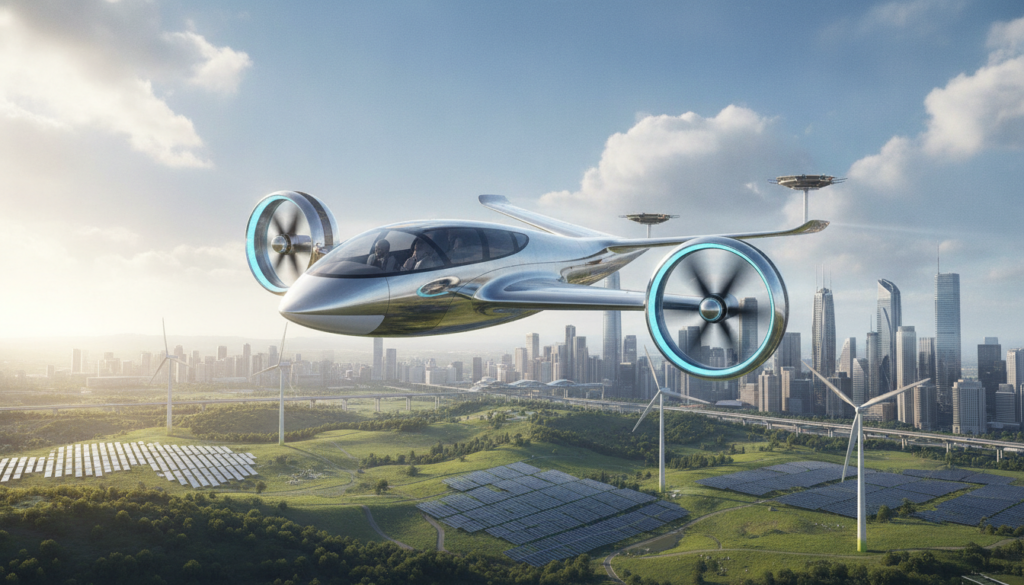
The journey toward cleaner skies gains momentum with every new test conducted by companies like Eviation and Joby Aviation. The future of electric aircraft is shifting from a distant promise to a reality taking shape before our eyes.
The pursuit of sustainable aviation requires a collaborative effort among engineers, regulators, and passengers. Each technical breakthrough brings us closer to a future model of air travel that respects the environment without sacrificing efficiency.
The energy transition in aviation is redefining our connection to the world. Optimism and responsibility drive this necessary shift, ensuring quieter and less polluting travel.