Anúncios
Have you ever felt that knot in your stomach while going through the X-ray checkpoint, fearing that an essential item might be confiscated before you board? Packing for international travel requires extra attention to detail.
Many travelers are unaware of how dimensions, total weight, and restrictions on liquids can affect their travel experience. Understanding these regulations ensures peace of mind throughout your entire journey.
Anúncios
Today, we will explore the fundamental rules to help ensure a smooth, hassle-free trip.
General rules for preparing your carry-on luggage
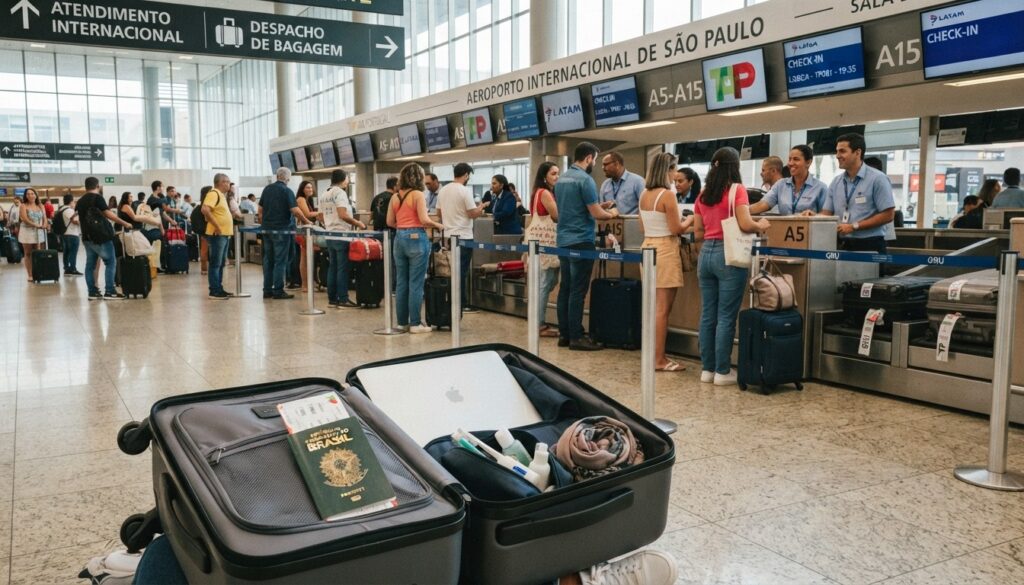
Preparing your carry-on bag requires attention to detail to avoid unpleasant surprises at the airport. When organizing your belongings, the focus should always be on efficiency and compliance with current security regulations.
Items generally accepted in the cabin
Most travelers can bring essential items along without any major difficulty. Among the items permitted in carry-on luggage are personal belongings that ensure your comfort throughout the journey.
Anúncios
- Lightweight clothing and jackets for temperature changes.
- Identification documents, passports, and boarding passes.
- Electronics such as smartphones, tablets, and e-readers.
- Books, magazines, and personal entertainment items.
Items requiring special attention during security screening
Some items are permitted through security but must be separated beforehand. Keeping these objects in easily accessible spots speeds up the process and prevents you from having to rummage through your entire bag in front of security personnel.
Place larger electronics—such as laptops—and liquids in external compartments or clear organizers. This allows for quick inspection during the screening process, while ensuring compliance with the carry-on baggage rules established by aviation authorities.
How to check airline requirements
Each airline has its own policies, which can vary significantly. Therefore, never assume that the same rules apply to every flight you take.
Information available on your ticket and booking
The first step is to check your electronic ticket or the airline’s website. Guidelines regarding weight and size limits are typically detailed in the “manage booking” section or at the bottom of your purchase confirmation.
Specific rules for international connections
If your itinerary includes connections, pay extra attention. Carry-on baggage rules may change if you switch airlines or if the country where you are connecting has stricter security requirements for transit passengers.
Allowed dimensions, weight, and number of items
Did you know that every centimeter of your suitcase counts when it’s time to board? Planning what to pack is essential to ensure everything goes smoothly before you reach the boarding gate.
How to measure your suitcase—including wheels, handles, and pockets
When checking the dimensions of your carry-on luggage, remember to account for the entire external structure, including the wheels, side or top handles, and even any external pockets that might be full.
Many airlines use metal sizers at the airport to test the size of your suitcase. If your luggage doesn’t fit perfectly into this space, it may be refused in the cabin.
Common weight limits for carry-on luggage
The weight allowance for carry-on luggage varies significantly depending on the airline and the fare type you’ve chosen. Some airlines allow up to 10 kg, while others may be more restrictive.
Always check the airline’s website before you start packing. Rules can change based on your destination and the type of ticket purchased, so verifying this in advance helps you avoid any surprises.
When a bag or backpack counts as a “personal item”
In addition to your main carry-on, most airlines allow you to bring a “personal item” on board. This is typically a small handbag, a backpack, or a laptop bag that can fit underneath the seat in front of you.
This item must be compact enough not to obstruct the aisle or walkway. If it is too large, ground staff may require you to check it as regular, hold-luggage.
What to do if your luggage exceeds the limit
If you realize your suitcase is over the weight or size limit, try rearranging your belongings between your bags. Sometimes, moving heavy items into your personal item can quickly solve the problem.
If it’s not possible to adjust the weight, be prepared to pay a baggage fee at the airport. In extreme situations, check whether it is possible to leave an item behind or send it by other means before proceeding to the security checkpoint.
Liquids, creams, gels, and aerosols in the cabin
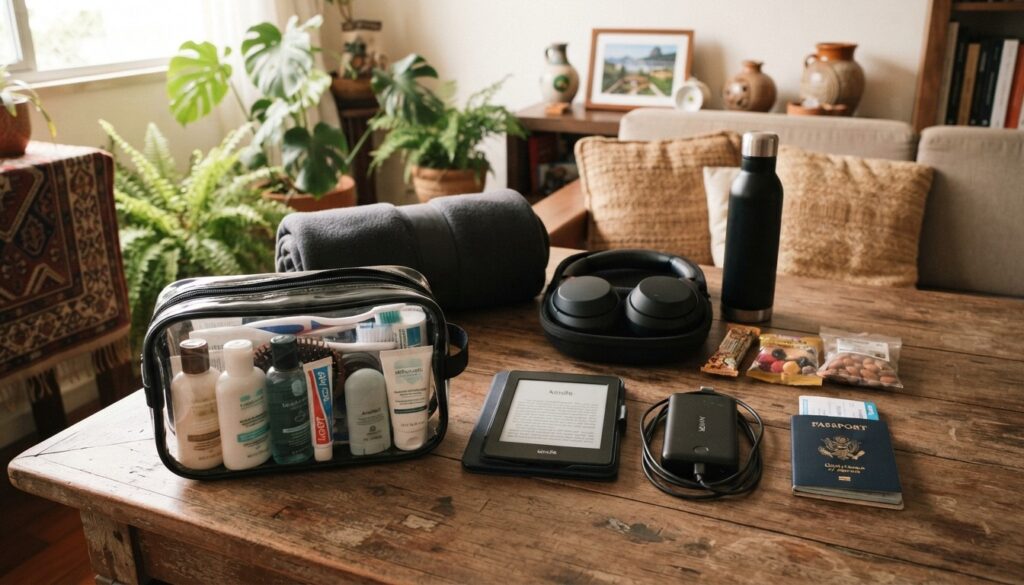
Transporting liquids, creams, and gels in the cabin is subject to strict international regulations. Understanding these guidelines helps prevent the disposal of valuable items during security screening.
How to carry containers within the permitted limits
To bring liquids on a plane, each container must have a maximum capacity of 100 ml. It is important to note that this limit refers to the size of the container, not the amount of product inside it.
If you have a 200 ml container that is only half-full, it will still be rejected. Therefore, ensure that all your personal care items are in appropriately sized containers before leaving home.
Transparent packaging and presentation at security screening
All containers must be placed inside a single, transparent, sealable plastic bag. This bag must have a maximum capacity of one liter and be easy to open.
When you reach the security checkpoint, remove this bag from your carry-on luggage. Place it in a separate tray so that security agents can clearly see the contents.
Exceptions for medications, baby food, and special needs
There are situations where the limits on liquids in the cabin are less restrictive. Essential medications, baby food, and items for special dietary needs are permitted in quantities necessary for the duration of the flight.
Useful documents and proof
Always carry medical prescriptions or statements justifying the use of specific substances. These documents make it easier for security agents to verify the items and help avoid unnecessary questioning.
Items purchased after security screening
Products purchased at airport shops—after passing through the X-ray checkpoint—can generally be taken on board. Ensure that the item remains sealed in the original packaging provided by the store.
Keep your proof of purchase visible alongside the product to ensure you won’t encounter any issues when boarding the aircraft with your new items.
Documents, cash, and valuables
Have you ever stopped to consider the importance of keeping your travel documents close at hand? Properly organizing these items is the first step toward ensuring your journey is free from unnecessary worries.
Where to store your passport, cards, and travel documents
Ideally, use a money belt or an easily accessible internal compartment in your carry-on bag. Keep your passport, credit cards, and booking confirmations in an organized folder or a dedicated document holder.
Avoid leaving these items loose in external pockets, where they could fall out or be forgotten. Having a designated spot for each item helps prevent the stress of searching for essentials during check-in or at immigration.
Why cash and documents should never be placed in checked luggage
Never pack your travel documents or large amounts of cash in luggage that will be checked. The risk of loss or damage to your suitcase could compromise your entire trip, leaving you without basic resources in an unfamiliar place.
Furthermore, you will need these items during layovers and security procedures. Keeping everything with you in the cabin ensures you maintain full control and security over your most important belongings.
How to protect jewelry, watches, and other valuables
For jewelry and watches, it is recommended to use compact, hard-shell cases that can fit inside your carry-on bag. Avoid bringing excessively valuable items that aren’t necessary for your trip, thereby reducing the risk of loss.
If you need to transport delicate pieces, wrap them in soft fabric to prevent scratches. Keeping these items close to your body—or in a bag that remains under your constant supervision—is the best protective strategy.
Organization to streamline security checks and boarding
Good organization allows you to move through security checkpoints quickly. Keep your travel documents in a separate compartment so you can easily present them to airport officials.
- Use transparent organizers to see the contents at a glance.
- Keep cards and cash in a compact wallet.
- Avoid mixing valuables with toiletries or electronics.
- Check that everything is in its place before leaving home.
Electronics and accessories allowed in the cabin
Did you know that how you organize your tech devices can make getting through security much easier?
Carrying electronics in your carry-on luggage is the recommended practice to ensure your valuables remain protected and within reach throughout your journey.
Mobile phones, tablets, computers, and e-readers
Devices such as smartphones, tablets, laptops, and e-readers are permitted in the cabin. They should be packed in a way that protects them from impact—ideally in padded compartments within your backpack or carry-on bag.
External batteries, standard batteries, and lithium batteries
Transporting lithium batteries on an airplane requires extra caution due to the risk of fire. For this reason, these items must always be kept with you in the cabin; they are never permitted in the aircraft’s cargo hold.
How to safely transport power banks
When bringing a power bank on a plane, ensure it is in its original packaging or that its terminals are covered to prevent short circuits. It is essential to verify that the battery’s capacity falls within the limits set by the airline.
Precautions for damaged or overheating batteries
Never attempt to travel with batteries that show signs of damage, such as swelling, cracks, or leaks.
If you notice a device overheating during the flight, inform a crew member immediately so that appropriate safety measures can be taken.
Cables, chargers, headphones, and power adapters
To stay organized, use cable organizers or small pouches to prevent cords from tangling. Also, remember to pack power adapters compatible with the standards used at your destination, ensuring you can charge your devices without any issues.
- Noise-canceling headphones.
- Wall chargers and USB cables.
- Universal power adapters.
- External storage devices.
Items that may need to be removed from your bag
During X-ray screening, security agents often ask passengers to remove computers and tablets from their bags.
Keep these items in an easily accessible spot in your luggage so you can take them out and put them back quickly, helping to keep the security line moving efficiently.
Conclusion

Planejar cada detalhe da sua bagagem de mão em voo internacional transforma a experiência de viajar. O sucesso de um embarque tranquilo depende do equilíbrio entre o respeito às normas vigentes e a organização inteligente dos seus pertences.
Verifique sempre as dimensões, o peso permitido e as restrições de líquidos antes de sair de casa. Consultar os canais oficiais da companhia aérea escolhida evita surpresas desagradáveis no momento da inspeção de segurança.
Mantenha documentos, medicamentos e eletrônicos essenciais em locais de fácil acesso dentro da sua bagagem de mão em voo internacional, garantindo agilidade durante os procedimentos de controle e proporciona maior conforto durante todo o trajeto.