
Anúncios
Have you ever wondered why some long-haul flights seem to fly by in the blink of an eye, while others feel endless?
In recent years, iconic models like the A350, the Boeing 787, and the giant A380 have completely transformed the way we traverse the skies, shrinking distances and redefining our expectations for international flights.
Anúncios
Here, we dive into the elements that make the difference between an ordinary journey and a memorable experience in the air.
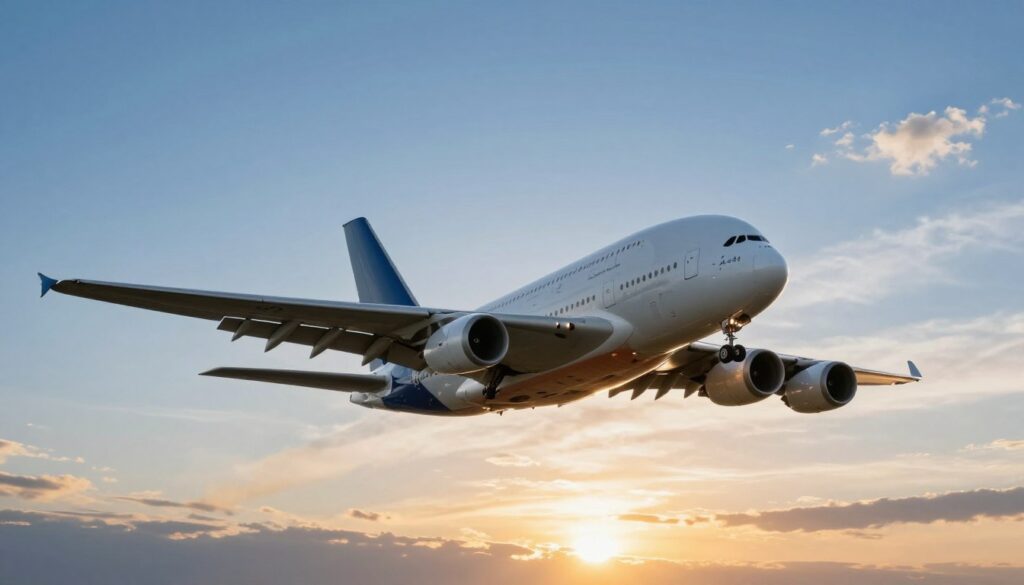
Airbus A380: The giant of the skies
The Airbus A380 transformed commercial aviation with its monumental size and innovative design. This double-decker aircraft not only dominates the skies but also offers an unparalleled travel experience for those seeking absolute comfort.
Observing this giant in operation, one realizes how cutting-edge technology allows such a massive structure to maintain a unique elegance. The A380 stands as a milestone in the history of modern aeronautical engineering.
Anúncios
The sensation of in-flight stability
One of the aspects most praised by travelers is the impressive stability during the journey. Even in adverse weather conditions, the A380’s weight and aerodynamics ensure an extremely smooth and balanced flight.
Beyond stability, reduced noise levels contribute to an atmosphere of tranquility, allowing passengers to rest or work without the auditory distractions common in earlier-generation models.
Cabin configurations and internal staircases
The passenger cabin of this model was designed to maximize the use of available space. The double-deck configuration allows for an interior layout that prioritizes well-being, offering expansive areas and spacious aisles.
One of the aircraft’s most iconic features is the luxurious internal staircases connecting the decks; these elevate the onboard experience, transforming the passenger cabin into a sophisticated and functional environment for long-haul flights.
Boeing 787 Dreamliner: Technology and comfort
The Boeing 787 Dreamliner redefines our expectations of modern air travel. This aircraft is not merely a means of transport but an environment designed to elevate the standard of well-being during the journey.
Every detail has been considered to ensure passengers arrive at their destination feeling refreshed.
Smart windows and lighting control
One of the Dreamliner’s most striking innovations is the replacement of traditional physical window shades with smart windows. At the touch of a button, passengers can adjust the window tint, blocking out sunlight without losing the view of the landscape outside.
This technology allows for much more precise and personalized light control. Beyond its practicality, the system helps maintain a more pleasant cabin atmosphere, easily adapting to the different time zones crossed during the flight.
Design focused on reducing fatigue
Onboard comfort is enhanced by a structural design focused on reducing traveler fatigue.
The Boeing 787 uses advanced composite materials that allow the cabin to be pressurized at lower altitudes than conventional aircraft.
This feature, combined with an air filtration system that maintains higher humidity levels, prevents the dryness often experienced during long-haul flights. As a result, the body undergoes less stress, ensuring passengers make the most of their time aboard the Dreamliner.
Airbus A350: Efficiency and well-being
Traveling aboard an A350 means discovering how engineering can transform well-being during long-haul flights; it stands out in today’s market by perfectly balancing advanced technology with the actual needs of travelers.
The constant quest for a more pleasant travel experience has found a powerful ally in this aircraft, which combines smart solutions to make time in the air feel much lighter and more productive.
Composite materials and the new flight experience
The use of advanced composite materials in the A350’s structure enables remarkable flight efficiency. This technical choice not only reduces the aircraft’s weight but also contributes to a much quieter cabin environment.
By reducing external noise, the passenger experience reaches a new level of tranquility, making it possible to rest or work with greater focus while enjoying the stability provided by the modern fuselage.
Ambient lighting and ergonomic design
Another key feature is the cabin’s smart lighting system, which simulates natural light cycles; this helps the body adjust better to different time zones and reduces the effects of jet lag.
The ergonomic design complements this focus on traveler well-being. Every detail has been carefully considered to ensure comfort is maintained, from seat layout to access on-board amenities.
This blend of technology and ergonomics places the A350 at the top of current preferences, proving that flight efficiency and the passenger experience can go hand in hand to create memorable journeys.
Cabin comparison: Space and configuration
The passenger cabin layout is one of the factors that most influences well-being on long-haul flights. How each airline organizes the aircraft’s interior defines the level of on-board comfort travelers will experience while crossing the skies.
Understanding these differences helps manage expectations even before booking. Each aircraft model offers distinct layout possibilities, directly impacting the sense of spaciousness and freedom during the journey. Economy Class Seating Layout
In economy class, the constant challenge for manufacturers is to optimize personal space without compromising the aircraft’s total capacity. Modern design aims for ergonomics that minimize fatigue, even in high-density seating arrangements.
Many airlines employ configurations ranging from 3-3-3 to 3-4-3, depending on the fuselage width. The current focus is on thinner, lighter seats that free up a few precious centimeters of legroom for passengers.
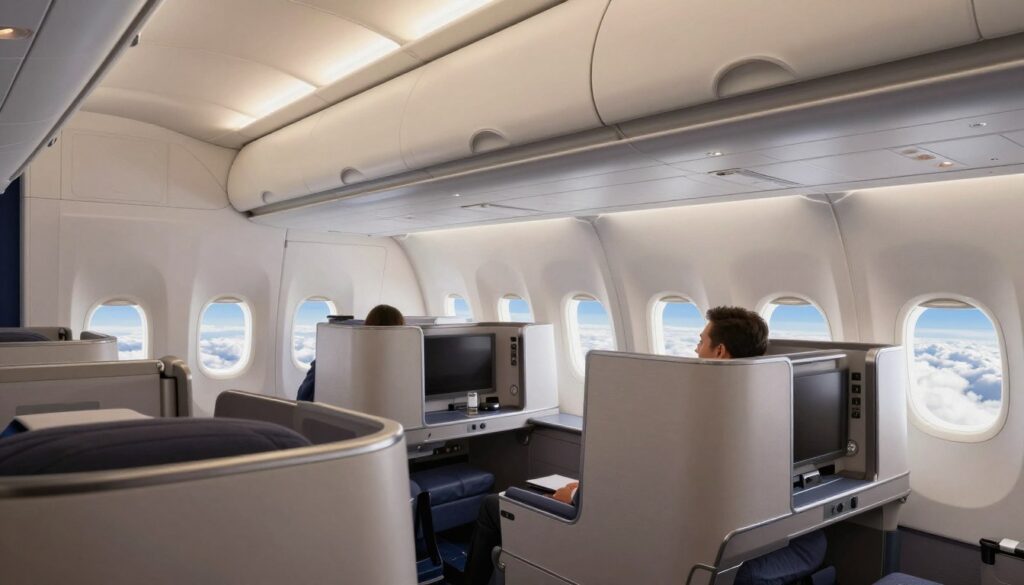
Privacy in Business Class
In contrast, business class has made privacy its key competitive advantage. Modern designs prioritize direct aisle access for every passenger, eliminating the need to disturb a neighbor when getting up.
“Herringbone” configurations or private suites ensure a secluded, quiet environment, allowing travelers to rest in complete tranquility and turning flight time into a period of rejuvenation.
Air Quality and Pressurization: The Impact on the Body
The secret to arriving at your destination well-rested lies in the cabin’s invisible engineering.
The way the environment is controlled directly influences your well-being during the journey. On long-haul flights, cabin pressurization and air quality are fundamental factors in preventing excessive fatigue.
In the past, aircraft did not offer the same level of comfort found in today’s models.
Today, technology reduces the stress placed on the human body, ensuring a much more pleasant and healthy experience for all passengers on board.
The importance of cabin humidity
One of the greatest challenges at high altitudes is maintaining adequate humidity levels. In older aircraft, extremely dry air caused discomfort, rapidly drying out the skin and airways.
Modern aircraft, such as the A350 and the 787, are designed to maintain higher humidity levels. This helps preserve the body’s natural hydration, allowing you to disembark feeling much more refreshed.
High-performance air filtration systems
Beyond humidity, the purity of the air we breathe is an absolute priority. High-performance air filtration systems operate continuously to ensure the cabin environment remains clean.
These advanced filters capture microscopic particles, viruses, and bacteria with impressive efficiency. Thanks to this technology, the circulating air remains free of impurities, protecting travelers’ health throughout the journey.
The combination of these factors turns the flight into a time for genuine rest. By investing in state-of-the-art systems, airlines ensure that air quality and cabin pressurization work together to enhance your physical comfort.
Conclusion
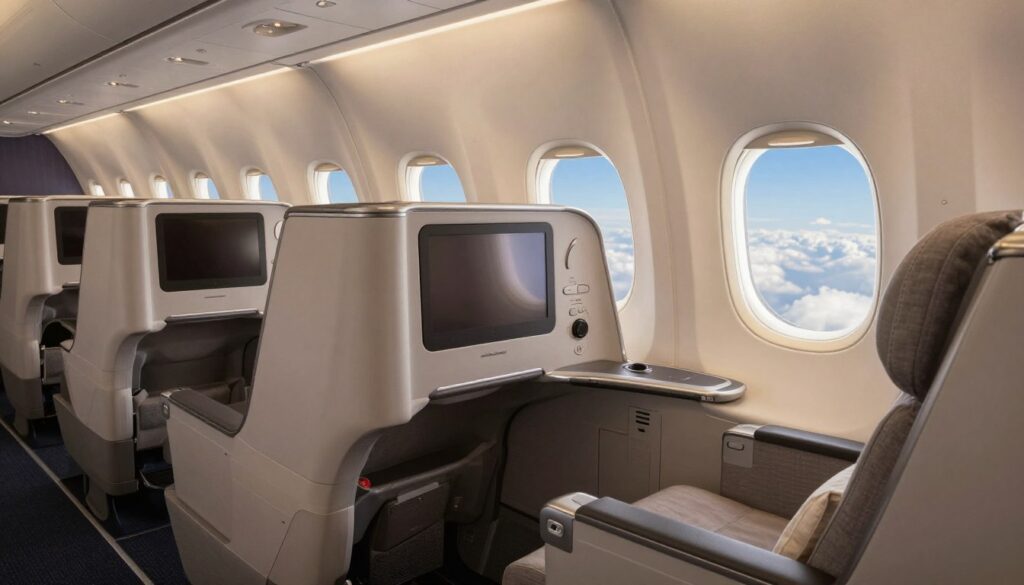
Flying on state-of-the-art aircraft like the Airbus A350, Boeing 787 Dreamliner, and Airbus A380 completely transforms one’s perception of distance. A focus on modern engineering ensures that passenger well-being lies at the heart of every aircraft design.
These innovations make long-haul flights far more comfortable and less fatiguing. The human body feels the impact of altitude less, allowing you to arrive at your destination feeling more refreshed and energetic.
Onboard technology creates an environment where comfort and efficiency go hand in hand. When planning your next itinerary, consider the type of aircraft available to ensure a superior experience on long-haul journeys.