
Anúncios
Have you ever wondered how it’s possible to travel with all your photographic equipment without having to pay extra baggage fees?
Traveling with your photographic equipment can be a challenge, especially when it comes to avoiding additional fees.
Anúncios
But, with a little planning and knowledge of airline baggage policies, it’s possible to take your cameras, lenses, and other accessories without breaking the bank.
Today, we’ll discover how to travel with photographic equipment without paying fees.
The challenges of transporting photographic equipment while traveling.
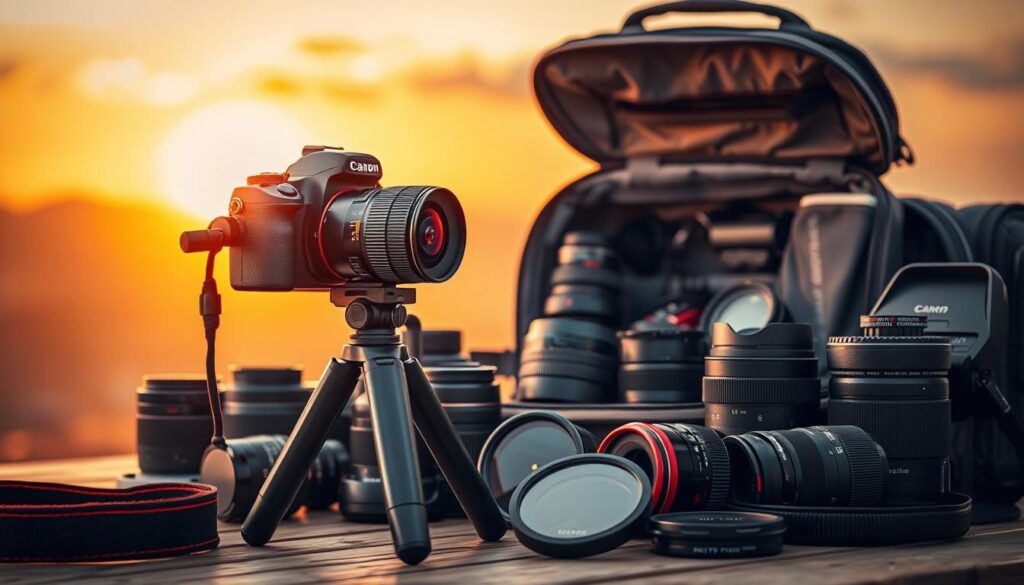
Transporting photographic equipment while traveling can be a major challenge due to airline restrictions. Professional photographers face the dilemma of protecting their valuable equipment while simultaneously dealing with airline baggage policies.
Anúncios
Why do airlines charge extra fees?
Airlines charge extra fees for several reasons, including excessive baggage size and weight. Professional photographic equipment is often bulky and heavy, which can lead to additional costs.
- Excessive baggage size and weight
- Equipment considered as special items
- Specific baggage policies for electronic equipment
Main obstacles faced by traveling photographers
Photographers who travel face several obstacles, including:
- Difficulty finding suitable bags that meet airline baggage policies.
- Concerns about the security of the equipment during transport.
- Challenges passing through security screening without damaging the equipment.
By understanding these challenges, photographers can better prepare for their trips, minimizing costs and ensuring the safety of their photographic equipment.
Understanding Baggage Rules for Photographic Equipment
Traveling with photographic equipment without paying extra requires knowledge of baggage rules. Airlines have varying policies regarding what is allowed in carry-on and checked baggage.
International Airline Regulations
International airlines generally have strict baggage regulations, so it’s essential to check the airline’s specifications before traveling.
Differences Between Domestic and International Flights
Baggage regulations can vary significantly between domestic and international flights. International flights tend to have more restrictive rules.
Permitted Weight and Dimension Limits
It’s important to understand the permitted weight and dimension limits for carry-on and checked baggage. The table below summarizes typical limits:
| Baggage Type | Maximum Weight | Maximum Dimensions |
|---|---|---|
| Hand luggage | 7 kg | 56x45x25 cm |
| Checked Baggage | 23 kg | 158 cm (sum of dimensions) |
Prohibited Items in Carry-on Baggage
Certain items, such as loose lithium-ion batteries, are prohibited in carry-on baggage. It is important to check the airline’s list of prohibited items.
Tip: Always check the airline’s website for the most up-to-date baggage information.
Choosing the Ideal Suitcase for Traveling with Photographic Equipment
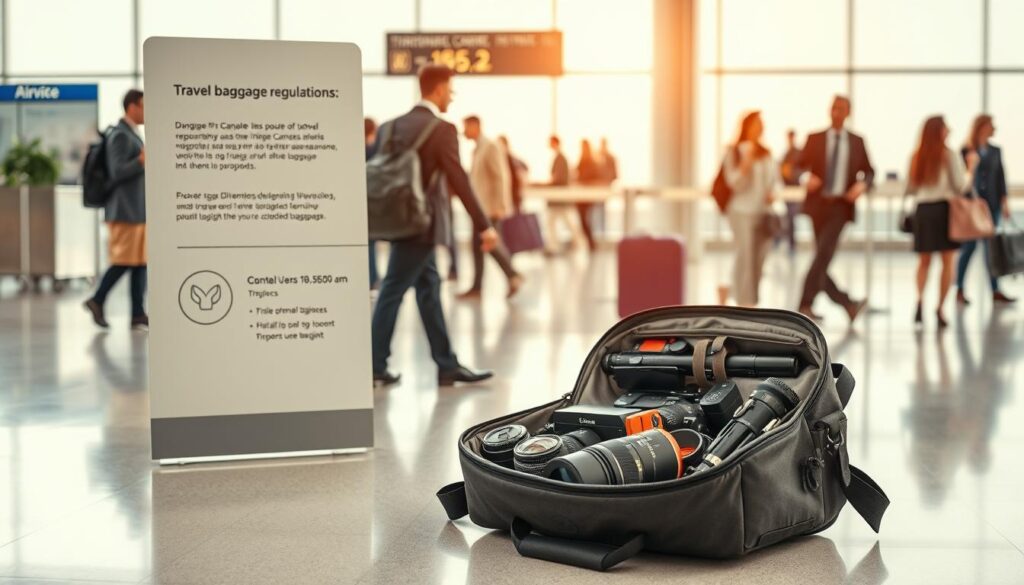
Choosing the right bag can make all the difference in protecting your photographic equipment during your trip. With so many options available, it’s important to consider the specific needs of your equipment.
Specialized backpacks that qualify as carry-on luggage
Specialized backpacks are designed to transport photographic equipment safely and comfortably, featuring padded compartments and dividers to organize lenses, cameras, and accessories.
Essential features for equipment protection
When choosing a backpack, it’s important to consider features such as:
- Durable and resistant material
- Padded compartments for equipment
- Accessories for attaching a tripod or other equipment
Discreet Protective Cases
For those who prefer a more discreet approach, protective cases are an excellent option, offering an additional layer of security without drawing attention to the value of the equipment inside.
Recommended Brands for Different Budgets
Several brands offer high-quality backpacks and cases. Some of the most recommended include:
| Mark | Product | Budget |
|---|---|---|
| Lowepro | Camera backpack | Medium/High |
| Think Tank | Protective case | High |
| Manfrotto | Backpack with compartments | Medium |
Choosing the ideal bag is an important step for any traveling photographer. With the right options, it’s possible to ensure the safety of your equipment and avoid extra fees.
How to travel with photographic equipment and pass smoothly through security inspection
Passing through security inspection with photographic equipment can be smooth if you are prepared. Security inspection is an important step to ensure the safety of passengers and crew.
Preparing your equipment for the X-ray scanner
Before reaching the X-ray scanner, it’s important to prepare your photographic equipment. Therefore, make sure all batteries are charged and that the devices are ready to be inspected.
Organize your equipment in a way that makes it easy to inspect. Use cases or bags specifically designed for photographic equipment, which facilitate the organization and protection of your items.
How to answer questions from security agents
During the inspection, it’s common for security agents to ask questions about your equipment. Be clear and cooperative when answering.
Documentation to present during the inspection
It is recommended to have documentation proving ownership and purpose of the equipment, which may include invoices, warranty certificates, or authorization letters for rented equipment.
| Type of Documentation | Description |
|---|---|
| Invoice | Proof of purchase of the equipment |
| Warranty Certificate | It verifies the authenticity and warranty of the equipment. |
| Letter of Authorization | Proof of rental or authorization for use of the equipment. |
Essential Apps for Traveling with Photography Equipment Without Extra Fees
Traveling with photography equipment can be a challenge, but with the right apps, it’s possible to avoid extra fees. Currently, there are several digital tools that can help make travel more economical and less stressful.
PackPoint: Organizing your camera bag efficiently

PackPoint – Baggage List
You will be redirected to another website.
PackPoint – Baggage List
PackPoint, Android and iOS, is an app that helps organize your travel bag, allowing you to create personalized packing lists, which is useful for photographers who need a lot of equipment.
MyTSA: Anticipating Airport Security Regulations

MyTSA
MyTSA, Android and iOS, is an official app from the U.S. Transportation Security Administration that provides up-to-date information on airport security regulations, which can help avoid problems during security screening.
Flio: navigating airports with baggage information

Flio – Your flight partner
You will be redirected to another website.
Flio – Your flight partner
Flio, Android and iOS, is an application that provides detailed information about airports, including baggage data, and can help to understand the baggage policies of different airlines.
Insurance for photographic equipment: protection without additional costs
Adequate insurance for photographic equipment can be the difference between a worry-free trip and a financial headache. With the reliance on high-tech equipment to capture unforgettable moments constantly growing, protecting these items is important.
When traveling, especially to international destinations, the risk of damage or loss of equipment increases. Therefore, understanding the available insurance options is fundamental for any traveling photographer.
Coverage through credit cards
Many credit cards offer coverage for photographic equipment as part of their benefits, so it’s important to check the card’s terms and conditions to understand what is covered and what is not.
Some credit cards may offer:
- Coverage for damage or loss during travel
- Theft protection
- Reimbursement for repairs or replacement
However, it’s important to read the fine print and understand the coverage limits and any exclusions.
Specific policies for traveling photographers
In addition to credit cards, there are specific insurance policies designed for traveling photographers, which may offer more comprehensive coverage for photographic equipment.
How to Document Your Equipment Before Traveling
Documenting your photographic equipment before traveling is an important step, and may include taking photos of each item, keeping receipts, and making a detailed list of what you are taking.
Having this documentation can facilitate the process of filing an insurance claim in case of damage or loss.
Procedures in Case of Damage or Loss
If your equipment is damaged or lost, it is important to know how to proceed, which involves notifying the airline or local authorities, depending on the situation, and contacting your insurance company as soon as possible.
Conclusion
When traveling with photographic equipment, good planning is essential to avoid extra fees and ensure the safety of your belongings.
One of the main tips is to carry your DSLR camera as hand luggage and never check it in, reducing the risk of theft or loss during the trip.
With these tips and a little planning, you’ll be ready for a trip without fees and with total security for your photographic equipment.