Anúncios
Have you ever imagined traveling between two foreign countries on an aircraft that belongs to neither of those nations? This intriguing possibility exists thanks to a strategic concept in global aviation.
Many seasoned travelers use so-called “fifth freedom” flights to explore the globe more efficiently.
Anúncios
Today, we will demystify how these international operations work.
The historical origin of the freedoms of the air
In 1944, during the Chicago Convention, world leaders gathered to establish a regulatory framework that would transform how we move around the planet.
This event was pivotal in creating the so-called “freedoms of the air.” These principles defined the ground rules allowing aircraft to fly over or land in other nations’ territories in an organized and safe manner.
Anúncios
Thanks to this agreement, commercial aviation evolved from a service restricted to a select few into a complex global network, enabling the expansion of air travel and connecting continents far more efficiently.
Understanding this history helps us appreciate how the aviation sector has evolved over the decades. Today, the freedoms of the air remain the legal foundation supporting the connectivity we experience in our everyday air travel.
How “fifth freedom” operations work in practice
Often, what appears to be merely a technical stopover conceals a valuable business opportunity for airlines.
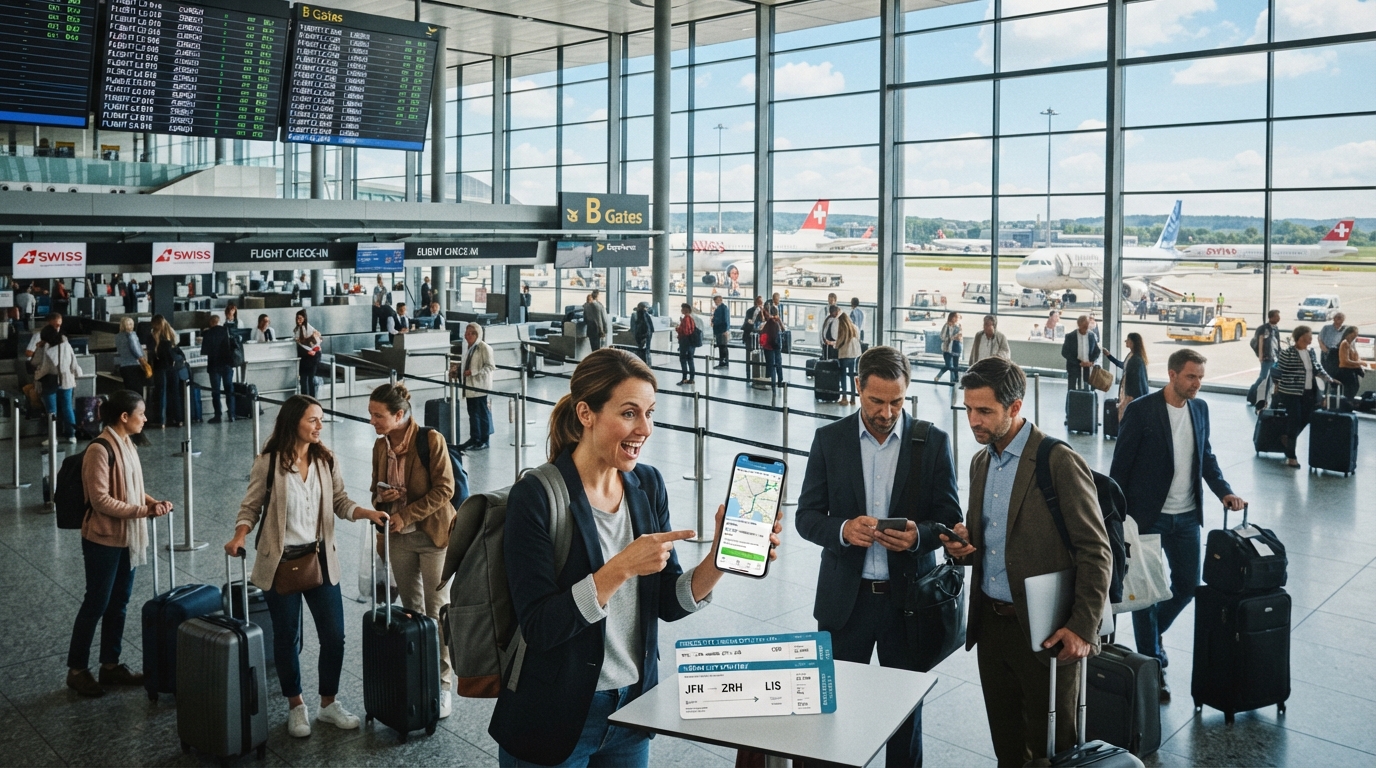
In practice, “fifth freedom” flights allow an airline to use an intermediate stop not just for refueling, but to board and disembark passengers.
Unlike standard technical stops—where the aircraft lands solely for maintenance or fuel—this model turns the stop into a commercial sales point; in other words, you can purchase a ticket for a flight segment that does not end in the airline’s home country.
To make this possible, airlines must strictly adhere to the freedoms of the air established in international treaties. These bilateral agreements between the nations involved ensure the operation’s legality and define the rules for transporting passengers and cargo.
This operational flexibility benefits both the airline—by optimizing aircraft utilization—and the passenger, who gains more route options. Understanding how “fifth freedom” flights work makes it clear that the aviation industry is constantly seeking ways to make travel more efficient.
Why airlines choose these routes
The choice of complex international routes is not accidental but rather a well-defined market strategy. Airlines seek ways to optimize aircraft utilization, recognizing that every empty seat represents a lost revenue opportunity.
By operating flight segments that might not be profitable in isolation, airlines can balance their books; this allows them to connect distant points across the globe without the need to invest in establishing a full operational base in every new country.
This smart approach offers several benefits for airline management. Below, we list the main reasons why companies adopt this operational model:
- Maximizing aircraft efficiency on long-haul flights.
- Increasing revenue by capturing passengers at intermediate stops.
- Expanding the global route network with reduced operating costs.
- Flexibility to test new markets without significant investment in local infrastructure.

The impact on airfare pricing
Airline market strategies directly affect your wallet.
When an airline operates a “fifth freedom” flight, it creates a unique pricing dynamic that benefits the savvy passenger, allowing travelers to find great deals on route segments that would otherwise be more expensive.
The primary effect of this type of operation is increased competition on specific routes. Since the aircraft is already flying to a final destination, the airline aims to fill available seats on the intermediate leg; this results in more affordable fares, as the airline prefers to sell the seat at a reduced price rather than fly with it empty.
For those looking to save money on travel, this is excellent news. By taking advantage of these flights, you can reach international destinations at a much better value than with conventional direct flights.
- Increased seat availability on international routes.
- Lower ticket prices due to strategic capacity management.
- Access to low-cost airfares on high-demand routes.
- Improved travel cost-efficiency through budget optimization.
Competitive advantages for the passenger
Have you ever considered how choosing a specific route can completely transform your flight experience? By opting for routes operated under “fifth freedom” rights, travelers gain access to benefits that go far beyond simply getting from point A to point B.
One major advantage is the chance to find low-cost fares on routes that would otherwise be expensive or served only by regional carriers; this allows for significant travel savings, freeing up part of your budget to better enjoy your final destination.
Beyond the lower cost, these flights often offer schedules that are much more convenient for your itinerary. You can fly short distances with world-renowned airlines, enjoying high-quality in-flight service that elevates the standard of your journey.
Ticket price, therefore, becomes just one of the positive aspects of this choice. By planning your vacation or business trips in advance, you can secure access to these exclusive routes, combining comfort with convenience.
Real-world examples of fifth-freedom routes
Did you know there are international routes that allow you to travel between two countries without the flight originating in either of them?
These are known as “fifth freedom” flights, and they offer unique opportunities for those looking to explore the world smartly.
A classic example involves routes departing from Asia, making a strategic stop in Europe, and continuing on to North America.
In these cases, the airline is authorized to sell tickets for the European leg alone, allowing passengers to enjoy a premium travel experience.
- Asian airlines operating short-haul flights within Europe.
- European carriers connecting American cities on transatlantic routes.
- Long-haul flights using intermediate hubs to capture new passengers.
Conclusion
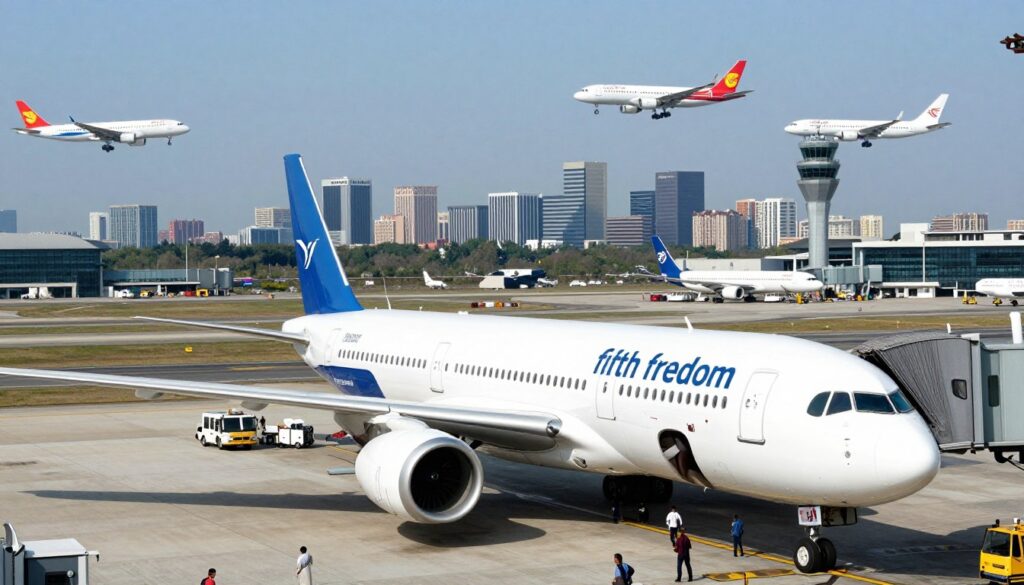
Exploring the world requires a keen eye for details that go unnoticed by most passengers. Fifth-freedom flights open the door to exclusive routes and competitive prices that transform the flying experience.
Understanding how airline alliances work allows you to choose more efficient itineraries. Knowledge of these operations helps avoid unnecessary connections and long layovers at international airports.
Recognizing these opportunities ensures your air travel is both more comfortable and cost-effective. The global market offers a wide range of options for those looking to optimize their budget without compromising on quality.